Seborrhoeic dermatitis: scalp and facial scaling and care
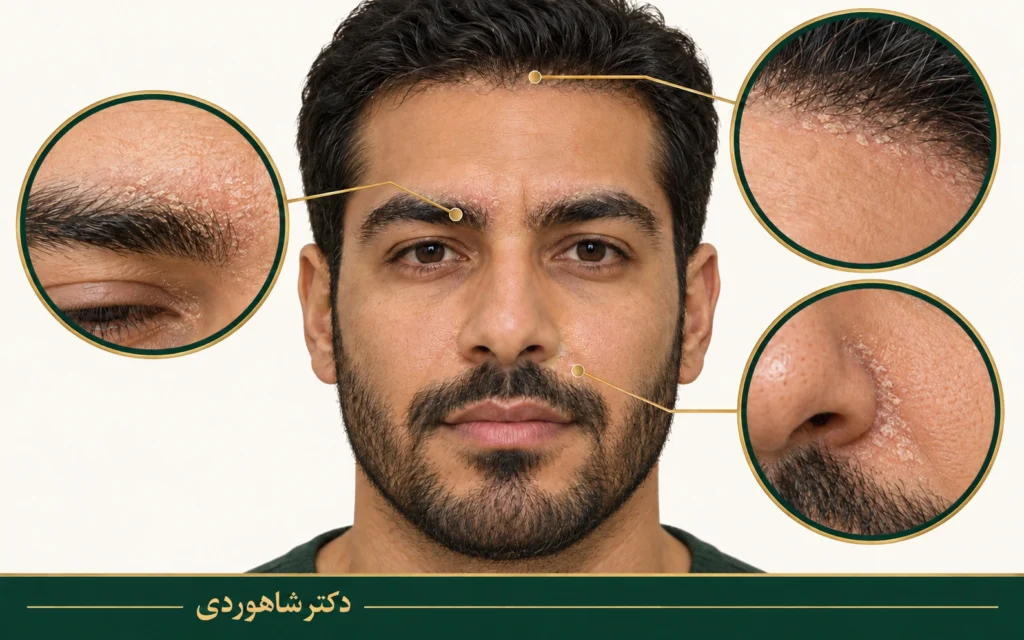
Recurring flakes and inflammation on the scalp, eyebrows, sides of the nose or behind the ears can fit seborrhoeic dermatitis. Similar changes can come from other conditions. Treatment usually aims to calm inflammation and manage recurrence. Scrubbing harder or repeatedly changing shampoos does not replace assessment of the pattern and the products you are using.
Where and how it appears
Seborrhoeic dermatitis affects oil-rich areas, including the scalp and parts of the face and chest. Scale may look white, yellow or greasy, with itch or soreness. On darker skin, lighter or darker patches may be more obvious than redness. Symptoms can vary between flares.
Dandruff is a common scalp presentation. Eyebrows, beard skin and the folds around the nose can be involved at the same time. The skin behind an ear is different from the ear canal, and the eyelid is different from the eye itself. The exact treatment site must be clear before a product is used.
What causes it, and what it does not prove
Several factors are thought to contribute, including the skin barrier and the response to Malassezia, a yeast normally present on skin. The condition is not explained by poor hygiene. Stress, tiredness, cold dry weather or irritation may coincide with flares, but the pattern differs between people.
Some medical conditions are associated with more severe seborrhoeic dermatitis, yet most people with it do not have an underlying illness. The rash itself does not diagnose HIV, insulin resistance, PCOS or ovarian disease. A clinician considers testing according to severity, response, risk factors and other findings, rather than ordering a universal panel.
Look-alike conditions and assessment
Psoriasis may cause thicker scale and can overlap with seborrhoeic dermatitis. Contact allergy or irritation from hair products can also contribute. Fungal scalp infection becomes particularly important when hair breaks or patches lose hair. A persistent sore or unusual one-sided area should not automatically be called dandruff.
Diagnosis usually relies on examination and history. A scraping or biopsy is sometimes used if the diagnosis is unclear. Bring the shampoos, styling products, beard products and creams you have tried, including steroid combinations. If there is hair loss, describe it separately; more than one factor may be present.
Gentle care rather than stripping the skin
Wash gently, rinse products thoroughly and dry without rubbing. Avoid picking scale, harsh brushes and repeated exfoliation. Use a tolerated fragrance-free moisturiser where appropriate. Limit the number of products introduced together so that irritation can be recognised.
Record what repeatedly precedes a flare: weather, sweating, stress or a particular grooming step. A natural or sensitive-skin label does not guarantee tolerance. Avoid repeatedly testing suspicious products on already inflamed skin. Be careful not to let scalp treatments reach the eyes or other areas for which they were not intended.
Understand the active and maintenance plans
Medicated shampoos and topical antifungal medicines are common options. A clinician may add a short course of an anti-inflammatory treatment or consider another medicine when appropriate. Which product, site and contact time to use should be stated clearly; shampoos have different ingredients and instructions.
Once a flare improves, the plan may change to maintain control. Recurrence does not automatically mean treatment failed. Review persistent symptoms before escalating to stronger medicines. Babies with cradle cap need age-appropriate care and should not be treated with an adult dandruff regimen. Pregnancy and breastfeeding also belong in the medicine discussion.
When to seek assessment sooner
Arrange review for continuing symptoms, repeated irritation, troublesome hair loss or an uncertain diagnosis. Pain, pus, spreading sores or fever require earlier evaluation. Eye pain, marked light sensitivity or blurred vision needs urgent eye assessment rather than applying an ordinary skin cream.
Ask what the diagnosis is, what improvement is expected and how to manage a recurrence. The goal should include a practical routine you can continue, not only clearing flakes on one day.
Dr Shahverdi’s practical notes
These points paraphrase practical guidance published in Dr Shahverdi’s Persian guide on this topic.
- Bring the onset, affected sites, medicines, supplements and comparable photographs to the visit.
- Clarify the diagnosis, treatment goal and response-review date from the beginning.
- Discuss hair loss alongside the inflammation, since multiple causes can coexist.
- Use a clear follow-up plan and do not stop prescribed care early without discussing it.
Common questions
Does every flake beside the nose mean seborrhoeic dermatitis?
No. Contact reactions and other conditions can look similar.
Is repeated recurrence normal?
Many adult cases relapse, so maintenance can be part of the plan.
Can I use one shampoo on scalp, eyes and ears?
Use it only on the sites and in the way advised. The eye and ear canal need separate safety considerations.
Preparing for a consultation with Dr Shahverdi
Bring a simple timeline and the exact names of shampoos and creams, including how long they were used and any irritation. Mention scalp tenderness, broken hair or shedding. Ask which product belongs on each site and what to do when symptoms return.

For a dermatology assessment at the clinic in Niavaran, Tehran, use the official contact and appointment page or call +98 21 2218 5180. Confirm the appointment time and any language arrangements before travelling. The examination determines whether treatment, further investigation or referral is appropriate. This guide cannot diagnose your condition or promise a treatment result. Urgent symptoms should be assessed through local urgent or emergency services.