Ovarian insufficiency, low ovarian reserve and changes in skin and hair
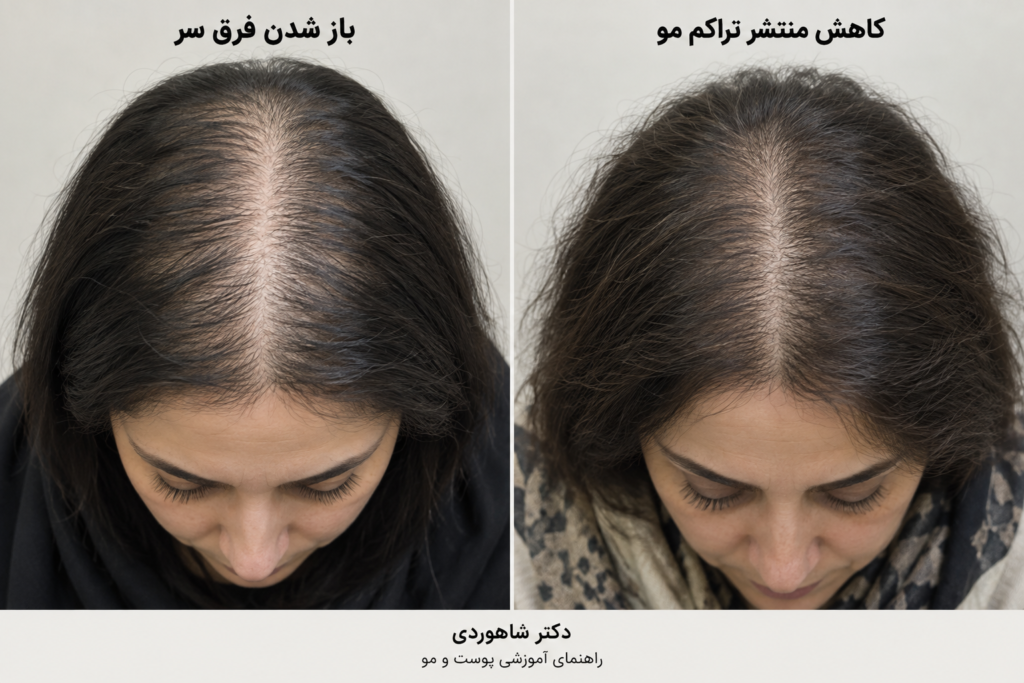
Dry skin or hair thinning can occur around changes in reproductive hormones, but neither symptom diagnoses ovarian insufficiency. If periods are absent or irregular, the reproductive assessment and the skin or scalp examination should each answer their own questions. A low AMH result alone cannot explain a hair complaint or confirm premature ovarian insufficiency.
Start with the exact ovarian diagnosis
Premature ovarian insufficiency, or POI, refers to reduced ovarian activity before age 40 with menstrual and biochemical findings. It differs from menopause at the usual age and from diminished ovarian reserve. The term primary ovarian insufficiency is also used in patient information.
Diminished ovarian reserve describes an estimate of the follicle pool; it is not automatically ovarian failure or menopause. PCOS/PMOS is another condition, often assessed through ovulatory and androgen-related features. The expression “low-functioning ovaries” is too imprecise to choose a skin, hormone or fertility treatment.
Where estrogen fits into a skin discussion
Estrogen influences several aspects of skin biology. Around estrogen decline, dryness and changes in skin comfort may become noticeable. However, aging, climate, washing habits, irritants, eczema, medicines and other health conditions can also contribute. A reproductive diagnosis does not prove the cause of every skin symptom.
Describe dryness concretely: roughness, cracking, tightness, itch, redness or painful irritation. These observations are more useful than saying that the skin “looks hormonal.” A dermatologist can distinguish a dry skin barrier from an inflammatory disorder and decide what requires treatment.
Hair loss needs a scalp diagnosis
A widening part, diffuse shedding and a patch of missing hair are different observations. Female pattern thinning may become more noticeable with age and does not require an abnormal blood androgen result. Shedding after illness, rapid weight change, childbirth or another major stressor can coexist.
Iron deficiency, thyroid disease, medicines, traction and scalp inflammation must remain possible explanations where the history supports them. Do not assume that an AMH report or a POI diagnosis accounts for the whole problem. Ask what type of hair loss has actually been identified and what evidence supports it.
Recognise scalp findings that should not wait
Pain, burning, redness, scaling around hairs or an apparently scarred area deserves earlier dermatology assessment. A receding frontal hairline with eyebrow loss can raise a different diagnostic question, including a scarring alopecia. It should not be dismissed as a routine sign of menopause.
Photographs can help show progression but cannot replace examination. Bring prior images if available and describe the rate of change. Prompt evaluation matters because the treatment aim in scarring disease differs from treating temporary shedding or gradually thinning hair.
Absent periods need their own evaluation
If periods stop or become markedly irregular, discuss pregnancy possibility, contraception, medications, recent illness, substantial weight change and reproductive history with the clinician. Several conditions can affect cycles. Stress is a possible context, rather than an automatic explanation that removes the need for assessment.
For suspected POI, the current international guideline combines menstrual history and biochemical confirmation. The appropriate timing and need for repeat tests depend on the situation. Your dermatologist may coordinate referral for reproductive or endocrine evaluation while separately treating a skin or scalp condition.
What low AMH can and cannot answer
AMH is used in particular reproductive assessments, often alongside age and other information. It is not a standalone test that proves why scalp hair is shedding, whether the skin is dry because of estrogen, or whether you will never conceive. Its purpose and limitations need to be explained in the consultation where it was ordered.
Do not compare one value with an online chart and turn the result into a diagnosis of POI or PCOS. Different clinical questions require different evidence. Ask whether the result changes the next step, and whether a reproductive specialist should interpret it in the context of your plans.
Choose tests for the clinical question
A reproductive clinician may evaluate cycle history, pregnancy possibility and appropriate hormones when POI or another menstrual cause is suspected. A hair-loss assessment may lead to selected tests for another cause, such as iron or thyroid problems, where indicated by the history and examination.
Ordering every ovarian, vitamin, autoimmune and androgen marker for every case of dry skin or hair loss is not automatically helpful. Bring existing reports with the dates, laboratory reference ranges and medicines taken at the time. Do not discontinue prescribed hormones or other treatment simply to obtain a supposedly more “natural” result.
Ovarian and dermatological management have different goals
POI requires discussion beyond appearance, including reproductive concerns and wider health. The international guideline addresses individualized hormone therapy and monitoring. This is a conversation with the clinician managing POI, not an instruction to purchase hormones or select doses from a skin article.
Skin and hair care still need their own diagnosis. Moisturisers, management of dermatitis and treatments for the identified hair-loss type answer different problems. Hormone treatment is not a guaranteed hair-regrowth or skin-rejuvenation procedure. If several clinicians are involved, make sure each knows the full medication list and pregnancy plans.
Fertility and hormone safety are separate specialist questions
If you are trying to conceive or worried about future fertility, raise that concern directly with a reproductive clinician. A dermatology assessment cannot estimate an individual fertility outcome from skin appearance. Do not treat online stories about low AMH, supplements or IVF as predictions for your own situation.
Pregnancy possibility can change which skin and hair medicines are suitable. Tell the dermatologist before treatment starts and whenever the plan changes. An ovarian diagnosis does not make contraception, pregnancy counselling or medication safety irrelevant.
Comfortable daily skin and hair care
Use gentle cleansing and a moisturiser that you can tolerate consistently. Very hot water, frequent harsh exfoliation and repeated product changes can make dry or irritated skin harder to manage. Seek advice for persistent redness, cracking, itch or pain rather than adding increasingly strong cosmetics.
Handle the scalp gently and avoid hairstyles that cause pulling. Keep comparable scalp photographs, a timeline of shedding and a list of products. Discuss restrictive diets or rapid weight changes, since they can matter to both general health and a hair-loss history.
Bring a history that connects the right information
Write down when cycles changed, when the skin or hair issue began and which came first. Bring ovarian and other laboratory reports without interpreting them yourself as a single final diagnosis. Include surgery, chemotherapy or radiotherapy history if relevant, medications, supplements and major health changes.
State the goal of the appointment: less itch, a clearer scalp diagnosis, assessment of shedding or help coordinating the next referral. This helps the consultation produce a plan you can understand and follow, even when more than one condition is involved.
Plan follow-up without promises
Agree on the diagnosis being treated, the expected review interval and which changes to track. Dry-skin comfort and hair density are different outcomes. Tell the clinician about adverse effects, new symptoms or pregnancy plans rather than increasing treatment yourself.
If hair loss progresses or the scalp becomes painful or inflamed, request review sooner. If the reproductive diagnosis remains uncertain, pursue that evaluation alongside skin care. The goal is coordinated, clear decisions, not an assumption that one hormone result resolves every concern.
Questions patients ask
Does low AMH cause hair loss?
A low value alone does not establish a direct cause. Hair type, examination, history and other possible contributors need assessment.
Are POI and PCOS the same condition?
No. Their diagnostic concepts and management differ. Ask for the exact diagnosis in your record.
Will hormone therapy restore all lost hair?
There is no such guarantee. Hormone therapy and the treatment of a particular alopecia have different clinical aims.
Can a dermatologist diagnose why my scalp is thinning?
A scalp examination can identify a pattern and guide further assessment. Menstrual or reproductive findings may also require another specialist.
Should I delay care until the ovarian evaluation is complete?
A skin or hair complaint can often be assessed in parallel. Painful or potentially scarring scalp changes deserve prompt review.
Arrange a skin and hair assessment with Dr Shahverdi
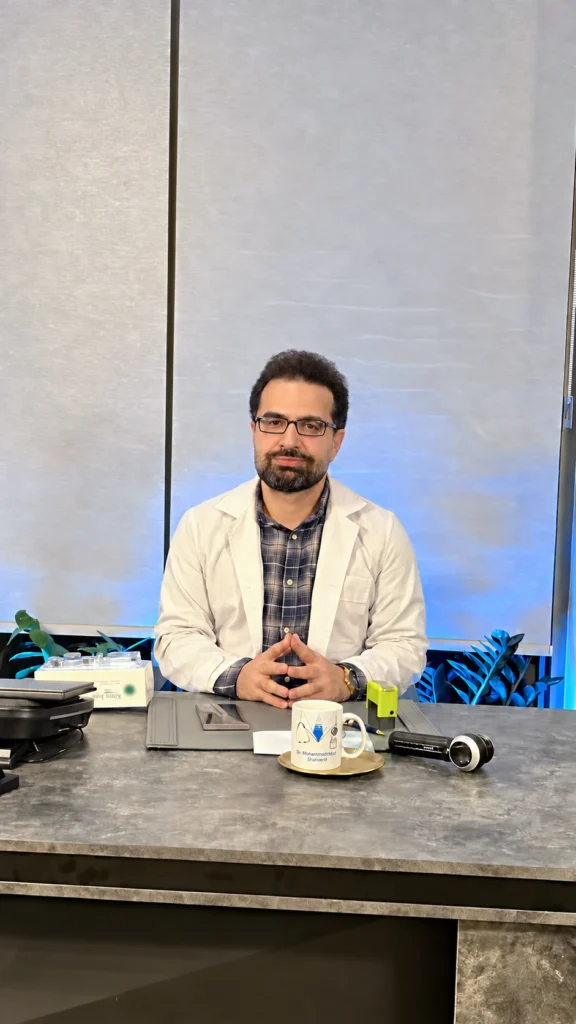
Bring the symptom timeline, medicines and prior reports so that the skin or scalp findings can be examined and the next step discussed. Dr Mohammad Hassan Shahverdi’s dermatology clinic is in Niavaran, Tehran. For appointment arrangements and language requirements, contact the clinic.