Vitiligo: white patches, diagnosis and treatment choices
A new white or unusually pale patch deserves assessment, because several conditions can change skin colour. Vitiligo causes loss of pigment, but dryness, a superficial fungal condition and changes after inflammation can look similar. Protect pale areas from sunburn while arranging a diagnosis. Treatment is a personal choice and cannot guarantee permanent colour restoration.
Contents
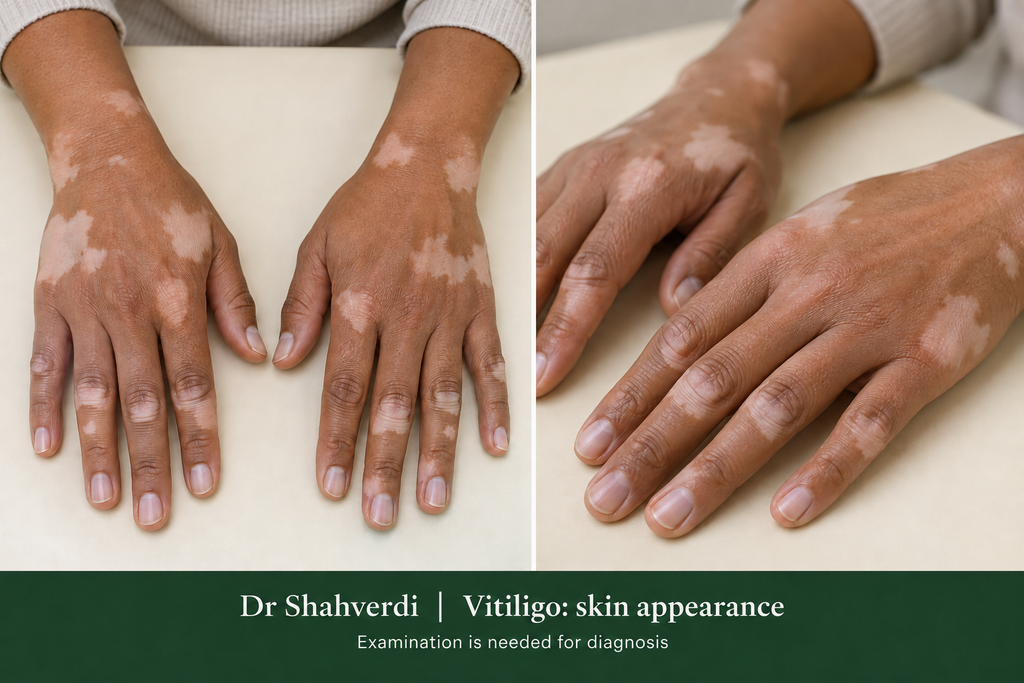
What vitiligo can look like
Vitiligo may affect the face, hands, skin folds, lips and other areas. Hair growing within a patch can turn white. The change may be more noticeable against darker skin, but people of every skin tone can develop it. The condition itself is not contagious and does not mean that the skin is unclean.
Non-segmental vitiligo commonly affects more than one region, often on both sides. Segmental vitiligo is usually limited to one side or a particular part of the body. The pattern and activity matter when discussing treatment. It is difficult to predict how an individual’s patches will change from a photograph alone.
How a dermatologist checks a pale patch
The assessment includes when the patch appeared, whether it is spreading, previous rashes or injury, family history, medicines and any other symptoms. Examination under a Wood’s lamp can make pigment loss easier to see. A scaly pale patch may suggest another diagnosis, such as pityriasis versicolor, rather than automatically confirming vitiligo.
Vitiligo is associated with autoimmune conditions, including thyroid disease. A clinician may recommend blood tests according to the assessment. This association does not mean everyone with vitiligo has thyroid disease, diabetes or a hormonal disorder. Bring previous results rather than ordering a broad panel without an explanation of what it would change.
Why pigment is lost
Pigment-producing cells are called melanocytes. In vitiligo, immune activity damages these cells. Genetic susceptibility can contribute, yet a relative with vitiligo does not make the condition inevitable. Injury, severe sunburn or certain chemical exposures can precede new patches in some people.
White patches do not diagnose PCOS, ovarian insufficiency or insulin resistance. A proposed association is not proof of a shared cause in an individual. If you also have menstrual changes, excessive facial hair or a known metabolic condition, discuss those separately so that the appropriate clinician can assess them.
Protect skin and support confidence
Use broad-spectrum high-protection sunscreen, shade and protective clothing. Areas with little pigment are more vulnerable to burning. Avoid sunbeds and deliberate burning to try to blend the colour. Prevent avoidable skin injuries; tattoos can provoke new patches and may not match surrounding skin as colour changes over time.
Camouflage makeup or a suitable self-tanner can be an option if you want it. Choosing not to hide the patches is equally valid. Tell the clinician if appearance changes affect relationships, school, work or mood. Emotional support can belong alongside skin care, without treating distress as the cause of the disease.
What treatment can and cannot achieve
Discuss whether your main aim is slowing spread, restoring colour, camouflage or understanding the diagnosis. Treatments may include carefully selected topical medicines or supervised light therapy. The face and some other areas may respond differently from fingertips. The correct choice depends on age, affected sites, activity and prior response.
Selected people with stable disease may discuss procedures to restore pigment. Such procedures are not appropriate for every patient, and scars or other risks need consideration. Treatment may take time, may only partly restore colour and may require maintenance. A home lamp should only be used within a prescribed plan; uncontrolled ultraviolet exposure can burn skin.
When to request assessment
Book a dermatology assessment for new, expanding or uncertain patches, or when existing treatment irritates the skin or no longer meets your goals. Mention any new thyroid-type symptoms, hearing changes or eye complaints. Eye pain, marked light sensitivity or vision changes need urgent eye assessment rather than waiting for a skin appointment. Review medicines before pregnancy or breastfeeding.
Dr Shahverdi’s practical notes
These points paraphrase practical guidance published in Dr Shahverdi’s Persian guide on this topic.
- Explain when the patch began, whether it has changed and which treatments you have tried.
- Ask whether the diagnosis is secure before treating every light patch as vitiligo.
- Discuss disease activity, body site and realistic goals before choosing light treatment.
- Protect depigmented skin from sunburn and mention the impact on confidence and daily life.
Common questions
Is every white spot vitiligo?
No. Examination helps distinguish pigment loss from fungal conditions, inflammation and other causes.
Can treatment restore all colour permanently?
Response varies, and restored colour can fade. Discuss likely benefit and maintenance for your own pattern.
Must I treat vitiligo?
You can discuss observation, protection, camouflage or medical treatment according to your preferences.
Preparing for a consultation with Dr Shahverdi
Bring older photographs in similar lighting, details of products and treatments, relevant test results and questions about spread or confidence. Explain any autoimmune history in you or your family. Ask what the treatment goal is and when the response will be reviewed.

For a dermatology assessment at the clinic in Niavaran, Tehran, use the official contact and appointment page or call +98 21 2218 5180. Confirm the appointment time and any language arrangements before travelling. The examination determines whether treatment, further investigation or referral is appropriate. This guide cannot diagnose your condition or promise a treatment result. Urgent symptoms should be assessed through local urgent or emergency services.