Insulin resistance and women’s skin and hair: dark folds, skin tags and the next step
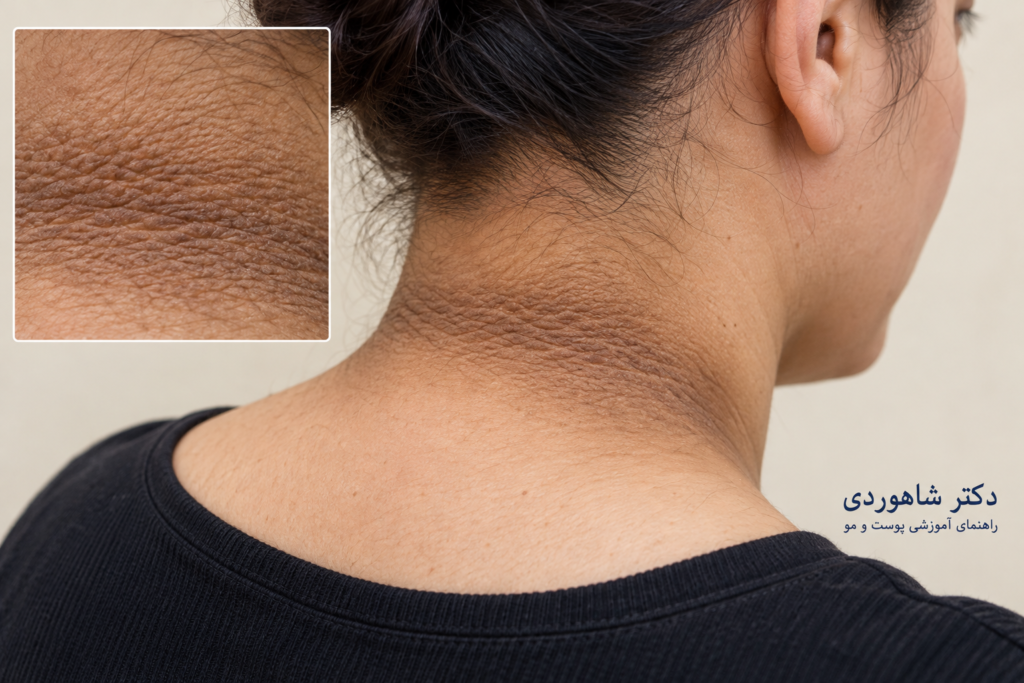
Dark velvety skin, new skin tags, acne and scalp thinning may prompt a discussion about metabolic health. They do not establish insulin resistance or diabetes by themselves. The useful next step is to identify the skin or hair condition, review the overall history and decide which medical assessment will answer the question.
Insulin resistance is not the same as high blood glucose
Insulin supports the use and storage of glucose. When tissues respond less well to insulin, the body may produce more to compensate. A blood glucose result can be normal during this process. Prediabetes and diabetes describe disturbances in glucose regulation and are assessed with defined clinical tests.
Insulin resistance may occur with PCOS/PMOS or separately. It cannot be reliably read from a face, body shape or skin photograph. Many people have no distinctive visible sign. Treating an identified skin condition is worthwhile even when metabolic results do not provide a complete explanation.
Recognising a possible acanthosis pattern
Acanthosis nigricans often involves darker, thicker skin with a velvety texture on the neck or folds. It can be associated with insulin resistance, but not every dark fold is acanthosis and not every case has the same cause. Friction-related pigmentation, inflammatory skin disease and other conditions can resemble parts of its appearance.
The texture, distribution, time course and medication history help examination. Colour alone is less informative than the whole pattern. Darker skin is not dirt, and repeated scrubbing can add inflammation or pigment. If a change is new, extensive or quickly progressing, arrange assessment before using aggressive whitening products.
HAIR-AN: a clinical pattern rather than a photo diagnosis
HAIR-AN refers to the combination of hyperandrogenism, insulin resistance and acanthosis nigricans. It describes a clinically important pattern involving androgen findings and metabolic features. The name does not mean that every person with dark folds and facial hair has this syndrome.
Assessment may need coordination between dermatology and endocrine or reproductive specialists. The intensity and speed of the changes matter, as do the menstrual history and relevant tests. A broad pattern deserves careful evaluation rather than a self-label based on an internet picture or a list of common symptoms.
Acne, coarse facial hair and scalp thinning need individual assessment
Insulin and sex-hormone regulation interact, which can make a combined skin, hair and menstrual history useful. However, acne alone is a weak clue for biochemical androgen excess. Female pattern thinning also has many contributors, and some affected women have androgen results within the usual range.
Describe whether scalp hair is gradually thinning, shedding diffusely or disappearing in patches. Bring previous photographs if available. A diagnosis of insulin resistance should not prevent examination for inflammation, scarring, iron deficiency, thyroid disease, medication effects or another cause of shedding.
Itching and infections are not specific tests for insulin resistance
Dryness, itching and recurring irritation are common symptoms with many explanations. They do not demonstrate a direct link to the ovaries or insulin. Persistent infections or slow-healing lesions may lead a clinician to consider glucose health, but still need examination and an appropriate diagnosis.
Likewise, research connecting metabolic health with psoriasis or hidradenitis suppurativa does not turn either condition into a diagnostic test for PCOS. Painful recurring nodules, drainage or scars in skin folds should be described specifically. Treating the inflammation and assessing relevant health risks can be parallel tasks.
A practical way to prepare for assessment
Record when the skin change began, where it appears, and whether there is pain, itch or a change in texture. Bring the medicines, supplements and creams you use. Note menstrual changes, previous glucose results, family history and pregnancy plans. Avoid guessing a diagnosis on the booking form; describe the problem in everyday language.
A dermatologist can examine the skin and scalp. Depending on the findings, primary care, endocrinology or gynaecology may contribute to assessment. The aim is to connect reliable observations, rather than to send every patient for the same large test panel.
Understanding glucose, HbA1c, OGTT, insulin and HOMA-IR
Fasting glucose and HbA1c assess aspects of glycaemic health. An oral glucose tolerance test measures how glucose levels respond over time after a glucose load. These are different from directly measuring insulin sensitivity. The suitable test depends on the clinical question and circumstances.
The international PCOS guideline identifies limits in routine clinical insulin assays and does not recommend using them universally in everyday care. An insulin value or HOMA-IR calculation should not be used as a standalone self-diagnosis with a single internet cutoff. A clinician should explain what a result can and cannot answer, and whether repeat or additional testing is useful.
Two goals: skin comfort and overall health
An appropriate plan may address an underlying metabolic issue and the skin complaint itself. Dark folds do not automatically require the same approach as acne or skin tags. Explain which change is most troublesome so that the plan has a clear goal and a reasonable review point.
Medicines used for glucose or weight management are not general skin-whitening or hair-regrowth treatments. Metformin, GLP-1 medicines, inositol and other supplements should not be selected from search phrases or online success stories. Choice, adverse effects, pregnancy considerations and monitoring belong to an individual clinical discussion.
Supportive care while the cause is being clarified
Avoid repeatedly rubbing or exfoliating irritated folds. Gentle cleansing, reducing uncomfortable friction and a suitable moisturiser may help comfort while you wait for assessment. New pain, a wound, discharge or a changing growth needs medical advice rather than stronger cosmetic products.
Discuss sustainable activity, food choices and sleep routines with your healthcare team. Improvement in metabolic health can be valuable even when a visible skin change takes longer or needs separate treatment. Neither weight loss nor a strict diet guarantees that a particular patch or hair symptom will disappear.
When the visit should be sooner
Promptly discuss sudden widespread darkening, rapidly increasing coarse hair or voice change. A lesion that changes, bleeds repeatedly or is not recognisable should be examined. A painful or scarring scalp also deserves early review.
Thirst, frequent urination, blurred vision or unexplained weight loss may raise concerns about glucose health. If symptoms are severe or you feel acutely unwell, seek urgent medical care. Do not wait for a routine cosmetic consultation when the main problem is systemic illness.
Measure the changes that matter
Ask what diagnosis is being treated, which observations to track and when to review them. Comparable photographs can document texture and colour without relying on memory. Note irritation, pain, new lesions and any change in medicines.
If the plan has not helped at the review point, the next step may be to revisit the diagnosis or a contributing cause. Increasing doses, applying more acids or combining several supplements yourself makes that assessment harder and can introduce new problems.
Questions patients ask
Does a dark neck mean diabetes?
No. It is a reason to establish the skin diagnosis and consider metabolic risk in context.
Can I have insulin resistance with normal glucose?
Compensation can maintain glucose within the usual range. A clinician interprets the overall history and appropriate glycaemic tests.
Does removing a skin tag treat insulin resistance?
Removal and metabolic assessment address different issues. A lesion should first be identified correctly.
Is HOMA-IR the only test I need?
No. A calculated value is not a universal standalone diagnosis and must not replace clinical assessment.
Can I improve my skin while metabolic assessment continues?
Often the skin complaint can be evaluated and treated alongside the broader assessment. The appropriate treatment depends on the identified condition.
Arrange a skin and hair assessment with Dr Shahverdi

Bring the symptom timeline, medicines and prior reports so that the skin or scalp findings can be examined and the next step discussed. Dr Mohammad Hassan Shahverdi’s dermatology clinic is in Niavaran, Tehran. For appointment arrangements and language requirements, contact the clinic.