PCOS, insulin resistance and women’s skin and hair: what the signs mean
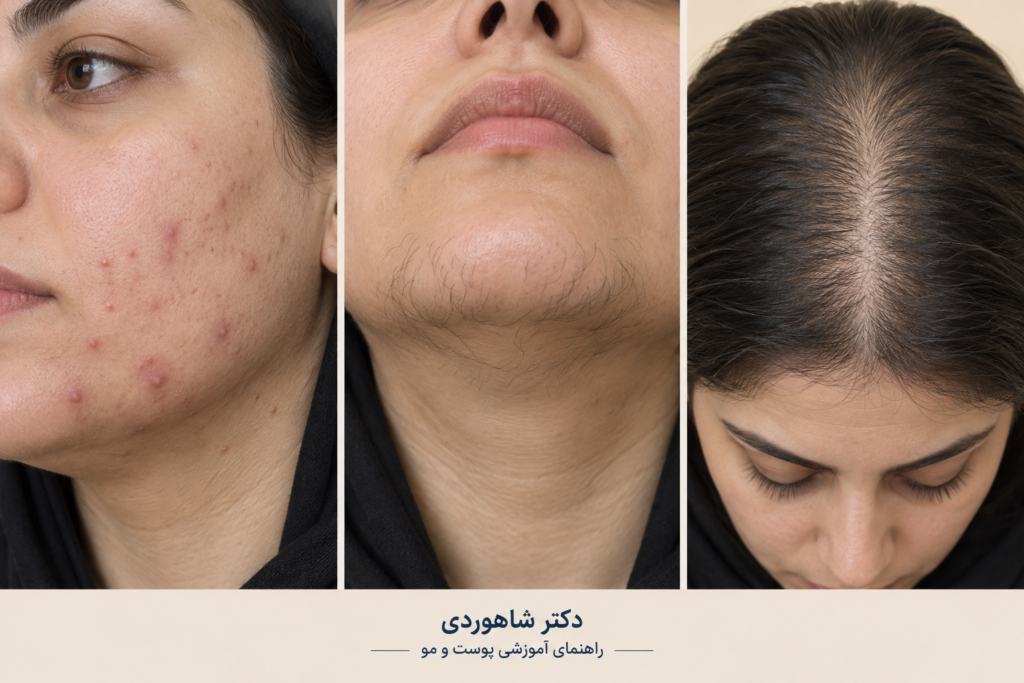
Persistent acne, new coarse facial hair, a widening scalp part and irregular periods can be reasons to assess hormonal and metabolic health. Each has other possible explanations. An ovarian diagnosis does not replace a skin or scalp examination, and a photograph or a single hormone result cannot identify the cause of your symptoms.
PCOS and PMOS: understanding the name
Polycystic ovary syndrome is a hormonal and metabolic condition. In May 2026, the international name changed to polyendocrine metabolic ovarian syndrome, or PMOS. Many records, searches and older resources still use PCOS. These names refer to the same condition; a change of name does not by itself change an individual diagnosis. Ask your clinician what criteria your own diagnosis was based on.
The word “polycystic” can be confusing: an ultrasound appearance alone does not explain every symptom. Some people with this condition have irregular ovulation, signs of androgen activity or metabolic concerns, while others present differently. You do not need to have every possible symptom. Androgens are hormones normally present in women; the clinical question is whether their level or effect is contributing to a problem.
PCOS, low ovarian reserve and ovarian insufficiency are different
PCOS concerns a pattern of hormonal and metabolic findings. Premature ovarian insufficiency, or POI, concerns reduced ovarian activity before age 40, evaluated through menstrual history and appropriate blood tests. Diminished ovarian reserve describes an estimate of the available follicle pool. These are not interchangeable labels.
Low AMH does not, on its own, diagnose POI or establish why hair is falling. A person with reduced ovarian reserve may continue to have regular periods. Conversely, acne or facial hair does not establish PCOS. If you have been told your ovaries are “weak” or “lazy,” ask for the precise clinical diagnosis before choosing a treatment.
How insulin and androgen effects can meet
Insulin helps regulate the movement and use of glucose. Insulin resistance means the response to insulin is reduced; the body may compensate by releasing more of it. Blood glucose can remain within the usual range during this compensation. Insulin resistance, prediabetes and diabetes are related concepts with different meanings.
In some people, insulin-related changes and androgen activity occur together. This can help explain why metabolic and reproductive findings are considered alongside skin and hair complaints. It does not prove that insulin is the cause of a particular acne flare or episode of shedding. Metabolic assessment and dermatological treatment can proceed together.
Does jawline acne prove a hormonal problem?
No location on the face is a reliable map of an internal organ. Persistent adult acne or flares around periods can raise a hormonal question, but jawline or chin acne alone does not diagnose an ovarian condition. Products, friction, hair removal, medications and acne-like disorders may also contribute.
Tell the clinician about menstrual changes, newly developing coarse hair and the speed of progression. Acne and female pattern hair loss in isolation are relatively weak predictors of raised androgen levels. Active acne, the pigmentation left after spots and permanent scars need different treatment plans. Waiting for a hormone issue to settle can delay useful acne care.
Why scalp hair may thin while facial hair becomes coarser
Hair follicles do not respond identically in every body area. A widening part and reduced scalp density can coexist with thicker hair on the chin or body. Female pattern hair loss may occur even when blood androgen results are not elevated. The appearance of the scalp helps guide assessment but is not sufficient to determine the hormonal cause.
Diffuse shedding after illness, childbirth, rapid weight change or another physical stressor is a different pattern. Iron deficiency, thyroid disease, medications, tight hairstyles and inflammatory scalp disorders may coexist. Bring comparable photographs taken with similar light and parting; a single day’s hair count on a brush is a poor measure of progress.
Unwanted hair and hirsutism
Hirsutism refers to coarse terminal hair in an androgen-sensitive distribution, such as the chin, upper lip, chest or central abdomen. Fine facial fuzz, normal body hair and generalised hair growth related to some medicines are not necessarily hirsutism. What feels unwanted to you matters to the consultation, even when it does not meet a medical definition.
Describe changes over time and any removal methods used, because shaving or plucking can conceal the pattern during examination. Rapid progression, especially with voice deepening or other signs of virilisation, deserves prompt assessment. Hair removal and investigation of a possible hormonal cause address different parts of the problem.
Dark, velvety skin folds: a clue that needs examination
Acanthosis nigricans can cause darker, thicker, velvety skin, commonly on the neck or other folds. It is associated with insulin resistance in some people, but it does not independently diagnose diabetes or PCOS. Other explanations and look-alike lesions must be considered.
The colour is not evidence of poor hygiene. Scrubbing, harsh peels and attempts to bleach the area may irritate it. New or rapidly spreading changes should be examined rather than assumed to be metabolic. Skin tags may coexist, yet an individual skin tag also has no diagnostic certainty about insulin resistance.
Other skin problems should keep their own diagnosis
Itching, eczema, psoriasis, rosacea and recurrent inflammatory lumps are not interchangeable manifestations of PCOS. An association reported in research does not establish a direct cause in an individual patient. Painful recurrent lumps with drainage in folds may raise the possibility of hidradenitis suppurativa and need their own examination.
Describe where lesions occur, whether they leave scars, and whether there is discharge or pain. An ovarian label should not make a clinician overlook infection, an inflammatory condition, or another local skin disorder. A treatment that helps one complaint may have no role in another.
What a useful assessment looks like
Start with a timeline: periods, acne, hair growth, scalp changes, weight changes and the medicines or supplements taken at the time. Mention pregnancy possibility, breastfeeding and plans to conceive. A dermatologist can assess the skin and scalp pattern; reproductive or endocrine findings may also require a gynaecology, endocrinology or primary-care assessment.
Tests should answer a clinical question. Depending on history and examination, the clinician may assess androgen activity, menstrual causes or glycaemic health. A large self-ordered panel can create confusing incidental results. If your periods are absent or markedly irregular, do not attribute that automatically to stress or PCOS.
Why “normal tests” and one abnormal result need context
A normal glucose measurement is not the same as proving normal insulin sensitivity. A glucose tolerance test assesses glycaemic status; it is not a direct measurement of insulin resistance. Current international PCOS guidance does not recommend routine clinical insulin assays as universal tests for everyday care.
AMH is not a standalone answer to PCOS, fertility, POI or hair loss. Age, symptoms, menstrual history, assay and clinical purpose matter. Hormonal contraception and some other treatments can affect interpretation. Do not stop prescribed medicines to “clean up” a test result without the clinician’s instructions.
Build treatment around the problem you want to improve
Name the priorities at the first visit: painful acne, visible facial hair, scalp density, discomfort, pigment changes or the effect on confidence. Each needs a clear goal and a follow-up plan. Hormonal or metabolic management may be important, while direct skin and hair care may still be needed.
Prescription choices depend on pregnancy plans, medical history and risks. Metformin, anti-androgens, hormonal contraception, isotretinoin and hair treatments are not interchangeable. Searching for a drug with PCOS does not establish that it treats the syndrome, is suitable for you, or should be started at a particular dose. Supplements described as hormone-balancing are also not a substitute for evaluation.
What you can do while arranging a visit
Use a gentle, manageable skin routine rather than adding several irritating products at once. Avoid picking spots and repeatedly rubbing dark folds. Treat the scalp gently, and tell the clinician about any active irritation. Keep a list of products so the visit can focus on what you actually use.
Sustainable eating, physical activity and sleep routines can support overall health, without a promise that weight change will remove every skin or hair symptom. Discuss restrictive diets, supplements and distress about body image openly. Seek a plan that you can maintain and measure, rather than a succession of short “hormone reset” challenges.
When to seek assessment sooner
Arrange prompt review for rapidly increasing coarse hair, voice deepening, rapidly progressive severe acne or abrupt marked changes. A painful, red or scarring scalp and loss of eyebrows or a receding frontal hairline also merit early dermatology review. Extensive sudden skin darkening should not be self-treated.
Thirst, frequent urination, unexplained weight loss or recurrent infection can raise a separate concern about glucose health. Severe symptoms or feeling acutely unwell need urgent medical care. These examples guide the urgency of assessment; they do not identify a diagnosis from a checklist.
How to judge progress fairly
Agree on when to review the plan and what will be compared. Use photographs, symptom frequency, discomfort and the ability to maintain treatment, rather than a promise of immediate cosmetic change. Report adverse effects, worsening symptoms or a change in pregnancy plans before continuing a treatment uncritically.
Hair cycles and skin inflammation do not move at the same speed. A lack of rapid visible change does not justify increasing a medicine yourself. At review, ask whether the original diagnosis still fits, whether several causes are present, and which next step is most useful.
Questions patients ask
Can acne alone diagnose PCOS?
No. The clinician considers the menstrual history, signs of androgen activity, examination and appropriate investigations. Acne has many possible contributors.
Does insulin resistance always mean diabetes?
No. These concepts differ. Glycaemic assessment and clinical context determine whether prediabetes or diabetes is present.
Can normal hormone results rule out every hormonal influence on hair?
No single result answers every question. Hair pattern, timing, medicines and other causes still matter.
Should I book a skin appointment or a gynaecology appointment?
A dermatology visit can assess acne, hair and scalp changes. Menstrual, reproductive or metabolic findings may also need another specialist; these assessments can complement each other.
Arrange a skin and hair assessment with Dr Shahverdi
Bring the symptom timeline, medicines and prior reports so that the skin or scalp findings can be examined and the next step discussed. Dr Mohammad Hassan Shahverdi’s dermatology clinic is in Niavaran, Tehran. For appointment arrangements and language requirements, contact the clinic.