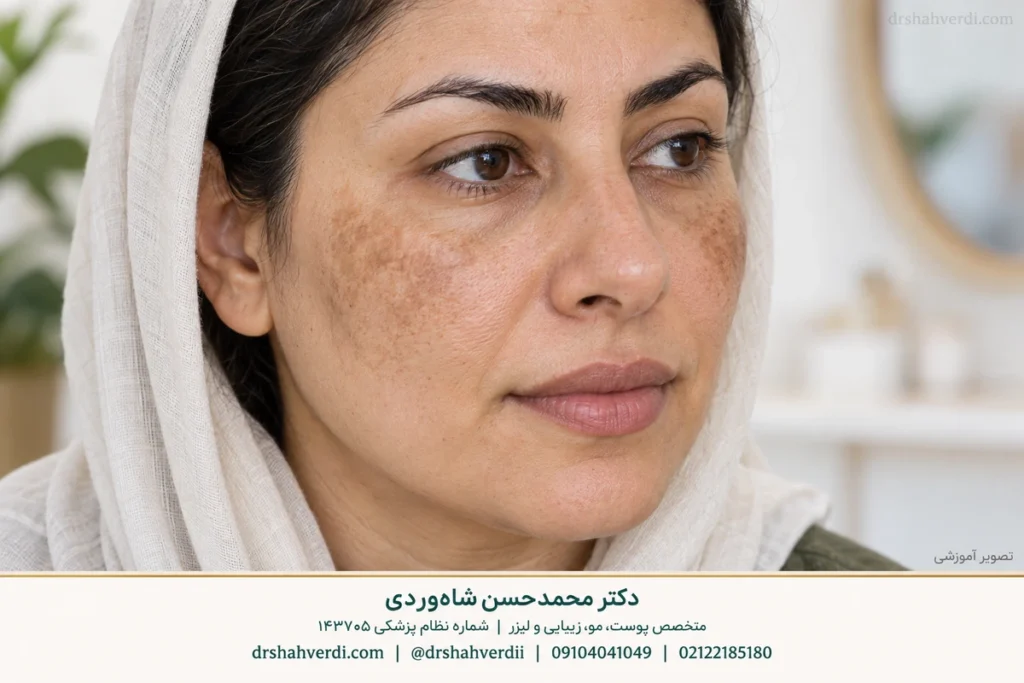
Melasma causes darker patches of skin, most often on the face. It can improve, persist or return, so a useful plan considers both fading the patches and maintaining the result. This English guide by Dr Mohammadhasan Shahverdi explains what to notice, how assessment helps and why a tolerable daily routine matters. A photograph or an online checklist cannot confirm the diagnosis.
What melasma means
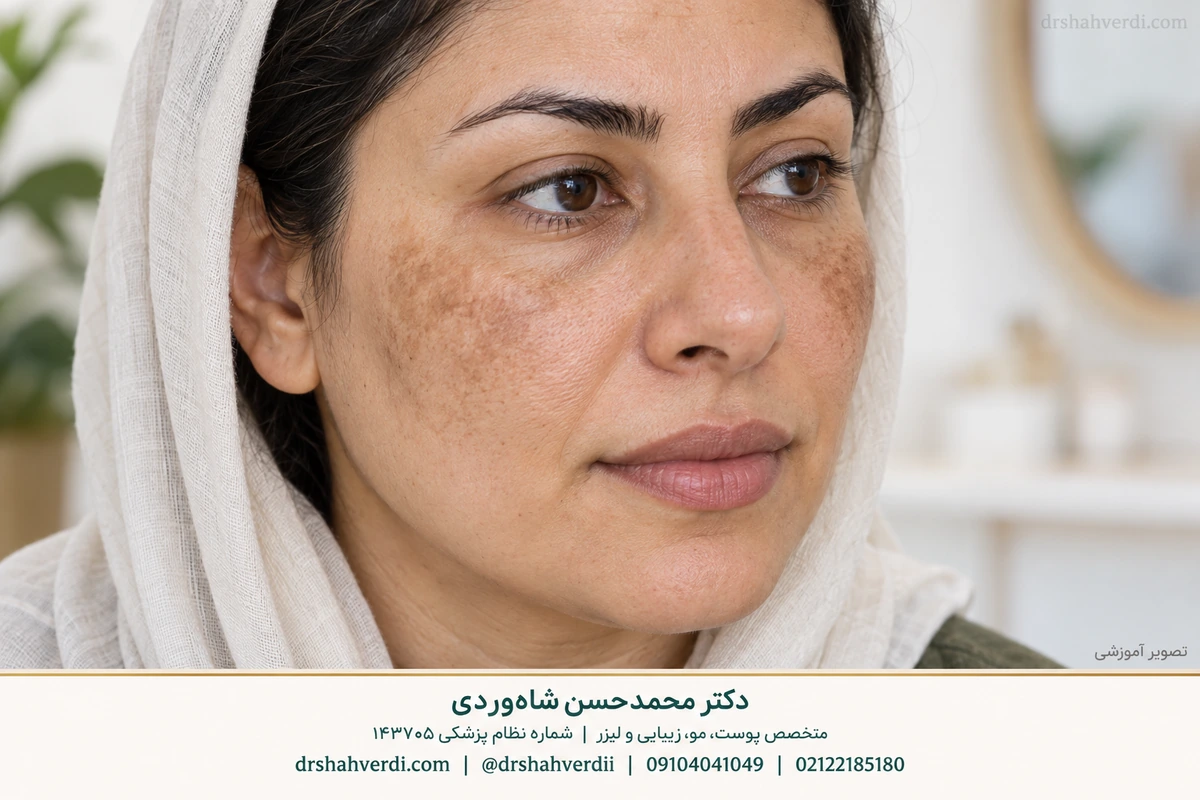
Melasma is a condition in which extra skin pigment, called melanin, creates darker patches. It is not contagious and does not reflect poor hygiene. Its visibility can affect confidence even when the patches cause no physical discomfort. People may choose treatment, camouflage or observation according to their priorities. The aim is to address the patches while preserving healthy skin and a person’s natural skin colour. AAD overview.
Where can you read original clinical references?
For the original overview and a section on causes, read the DermNet melasma guide. PCDS provides a melasma patient information leaflet as well as its clinical melasma chapter. The NICE link here describes the Clinical Knowledge Summaries service; it is not a melasma-specific topic link or a NICE recommendation for an individual treatment.
Pathology Outlines is an original pathology reference. Interpretation of histological findings depends on the clinical picture and, when obtained, the actual skin specimen report. Online terminology or resemblance to an image does not replace assessment of your own pigmentation.
Causes, triggers and pigment biology
Family susceptibility, sunlight and hormonal circumstances may contribute together. A trigger makes a predisposed patch more visible; it is not proof of one cause for every person. Pregnancy and some hormonal medicines are relevant history. Do not stop contraception or hormone treatment on your own; discuss its timing and alternatives with the prescribing clinician. A new patch during perimenopause or menopause still needs assessment rather than an automatic “hormonal” label. Skin irritation from a product may add post-inflammatory pigmentation.
Melanin is the pigment; melanocytes are cells that make it, and melanogenesis is the production process. Tyrosinase is one enzyme in that process. Several treatments influence pigment production, but a mechanism alone does not establish that one cream is superior. In melasma, the surrounding skin environment and several interacting processes matter too. DermNet explains this clinical context.
If you prefer Persian, read the Persian melasma hub. For a requested Hindi, Malayalam, Indonesian or Portuguese explanation, use a qualified clinician or a reliable original resource in that language; this English article does not certify a translated version or a language service.
Patterns and names you may encounter
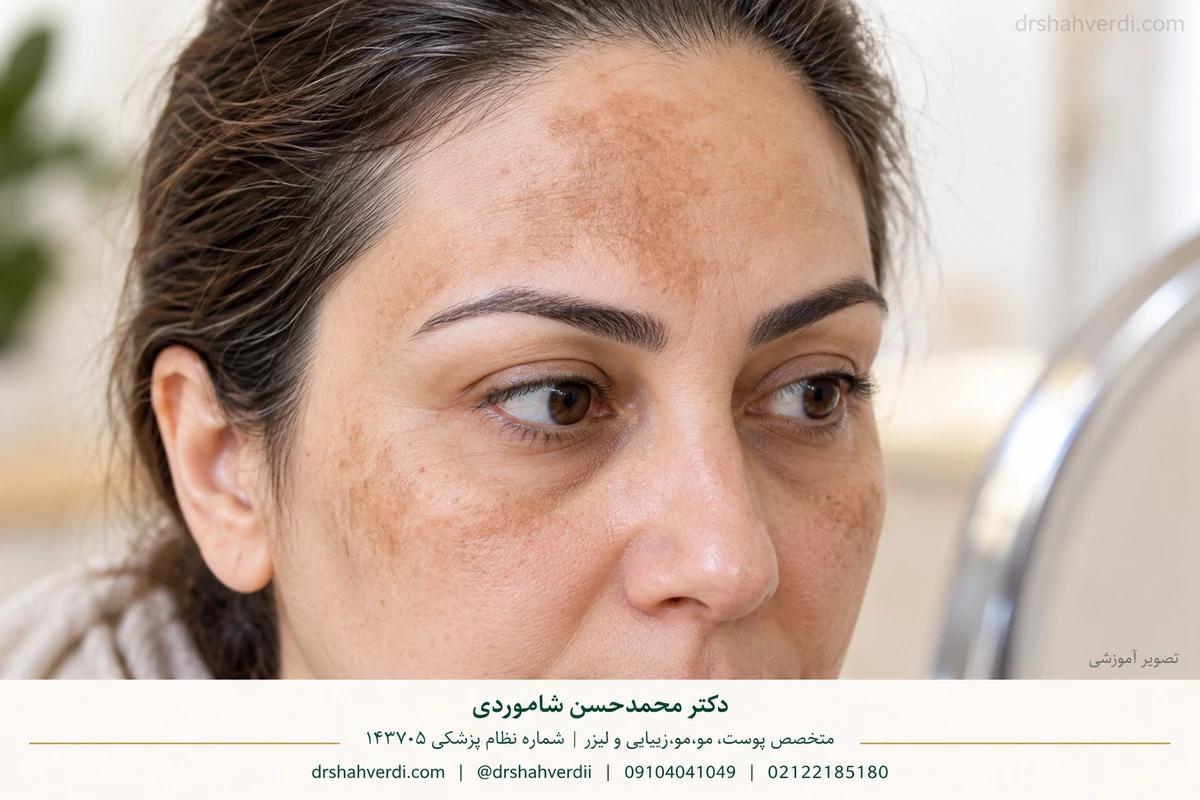
Typical patches are brown or grey-brown and often affect both cheeks, the forehead or the upper lip. Men can also develop melasma. Chloasma is another name, often used when discussing pigmentation during pregnancy. The name alone does not confirm the diagnosis; similar-looking patches can have other causes. Signs and symptoms.
How is chloasma pronounced?
Merriam-Webster Medical gives the pronunciation as klō-ˈaz-mə, with stress on the middle syllable. Pronunciation explains the word; it does not identify the cause of an individual patch. Chloasma commonly refers to melasma associated with pregnancy, but melasma also occurs outside pregnancy.
Do melasma and chloasma have the same diagnosis code?
For an ICD-10 query, the recorded diagnosis and the classification used in the relevant healthcare system must be checked first. A search term is not a confirmed diagnosis, and it does not establish a particular country’s clinical modification or insurance coverage. The dark-spots guide explains why coding follows clinical documentation.
Location, skin tone and pregnancy context
Scroll sideways to see all columns.
| Description | Meaning and next step |
|---|---|
| Centrofacial | The central face, including forehead, cheeks, nose or upper-lip region. |
| Malar | Mainly the cheek region. |
| Mandibular | The jawline region. |
| “Melasma moustache” | A nickname for upper-lip pigmentation; hair shadow or irritation after hair removal may look similar and needs a different assessment. |
| Outside the face | Extra-facial melasma can occur in sun-exposed areas, but a mark on the hand, chest, breast, abdomen, leg or neck is not automatically melasma. |
Extra-facial melasma can rarely affect the neck, chest or forearms; the PCDS patient leaflet describes these locations. A hand, arm or abdominal mark still needs assessment of its own pattern. Bring its onset, sun exposure, prior rash or friction, and product history to the appointment. Those details help distinguish a body pigment concern from facial melasma; they do not confirm the diagnosis. Use the body-pigmentation guide (Persian) for the broader body assessment.
Melasma occurs in different skin tones. Naturally darker colour, ethnicity or male sex cannot establish a diagnosis. Irritation-related darkening can be a particular concern in skin of colour, so preserving a comfortable skin barrier matters. Men should also review shaving reactions, prior inflammation, sun exposure and medicines; there is no universal male-only regimen. Our guide to melasma in men (Persian) covers those questions.
During pregnancy, the timing of pigment change varies; there is no universal onset week. Darkening of the areola or an abdominal line is not the same clinical pattern as facial melasma. Improvement after delivery is possible but not certain. Begin with gentle care and light protection, and have the exact medicine reviewed for pregnancy or breastfeeding; hydroquinone and topical retinoids should be avoided during pregnancy. Pregnancy and postpartum pigment care (Persian) gives focused safety guidance.
For neck or body pigmentation, use the body-pigmentation guide (Persian) rather than copying a facial prescription. Thick or velvety darkening in folds needs a distinct assessment; the acanthosis nigricans guide (Persian) explains why.
Under-eye darkening or “dark circles” is a separate descriptive concern with several possible causes; it is not automatically melasma. Itching, scaling or other skin changes may point to dermatitis or a contact reaction that needs assessment. Do not copy a cheek prescription onto the eyelids without clear instructions for that area. PCDS includes periorbital pigmentation in its differential guidance.
To look up a diagnosis code, use the official CDC ICD-10-CM browser when the US classification is relevant, select the appropriate fiscal year and read the tabular notes. Other systems and countries may use different classifications. A clinician’s documented diagnosis must come before selecting a code; no code is assigned to you by this article.
How a dermatologist assesses patches
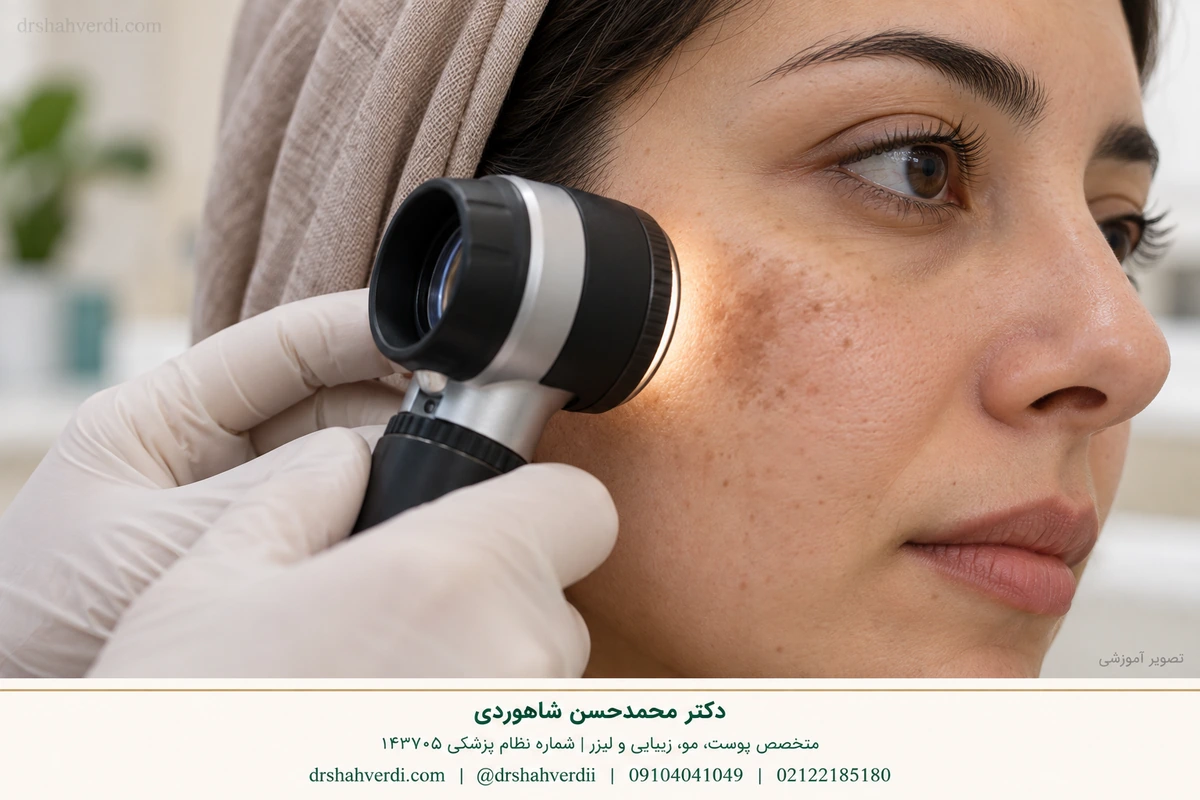
Assessment considers the pattern, when it began, previous inflammation, medicines and products. The dermatologist may use a Wood’s lamp, a special examination light, or a dermatoscope, a magnifying examination instrument. These support an examination; a phone photograph or home questionnaire cannot reliably establish pigment depth or rule out every alternative diagnosis. Compare the alternatives in our dark-spots guide, and bring older photographs and a list of products to your visit. AAD assessment and treatment.
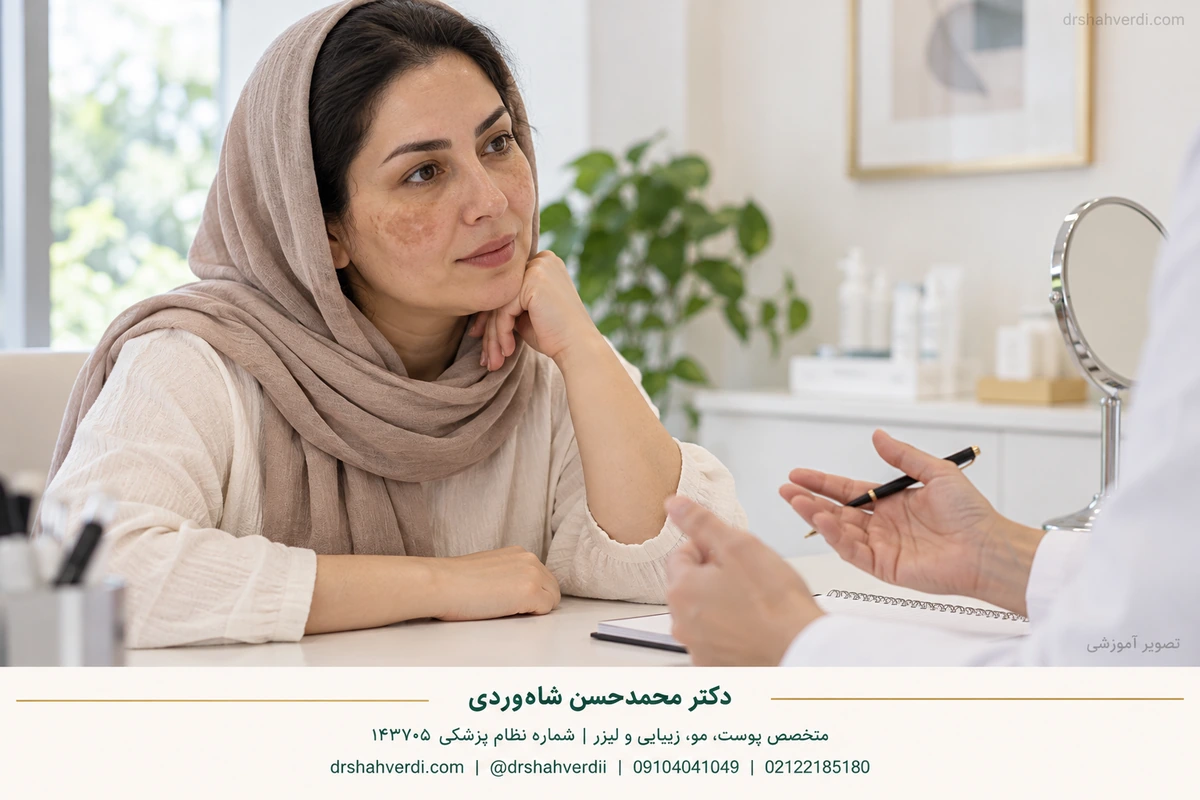
What do mild, moderate and severe melasma mean?
These words describe severity, rather than separate causes of melasma. Clinicians may use measures such as the modified Melasma Area and Severity Index, or mMASI, to record the area and darkness of pigmentation. A severity label in a study must be read using that study’s stated scoring criteria. An unstandardised photograph cannot assign a definitive grade, and a score does not select one treatment for everyone. Mild-to-moderate describes a range; it is different from calling pigmentation epidermal, dermal or mixed.
Depth, tools and severity are different questions
Epidermal, dermal and mixed describe the proposed location of excess pigment in the outer skin, deeper skin or both. They are not the same as mild, moderate or severe. A Wood’s lamp changes examination lighting and a dermatoscope enlarges skin patterns; these tools support the clinical assessment and have limits, particularly when the background skin colour affects contrast. A dark phone photograph cannot prove “deep” melasma or predict a specific treatment response.
The Melasma Area and Severity Index, MASI, is a clinical research measure. The modified version, mMASI, concentrates on affected area and darkness; the original validation found that a separate homogeneity component could be removed. Scores help compare a defined treatment over time under consistent assessment. They are not a self-diagnosis, a quality-of-life score or one universal prescription threshold. Original MASI/mMASI validation study.
Choosing a treatment path
Sun protection is part of the treatment itself. A dermatologist may add a topical medicine and review its effect and tolerability before considering another option. Procedures are possibilities for selected patients, not an automatic next step. Use the treatment-options guide to prepare questions about the purpose, review date and maintenance plan for each recommendation.
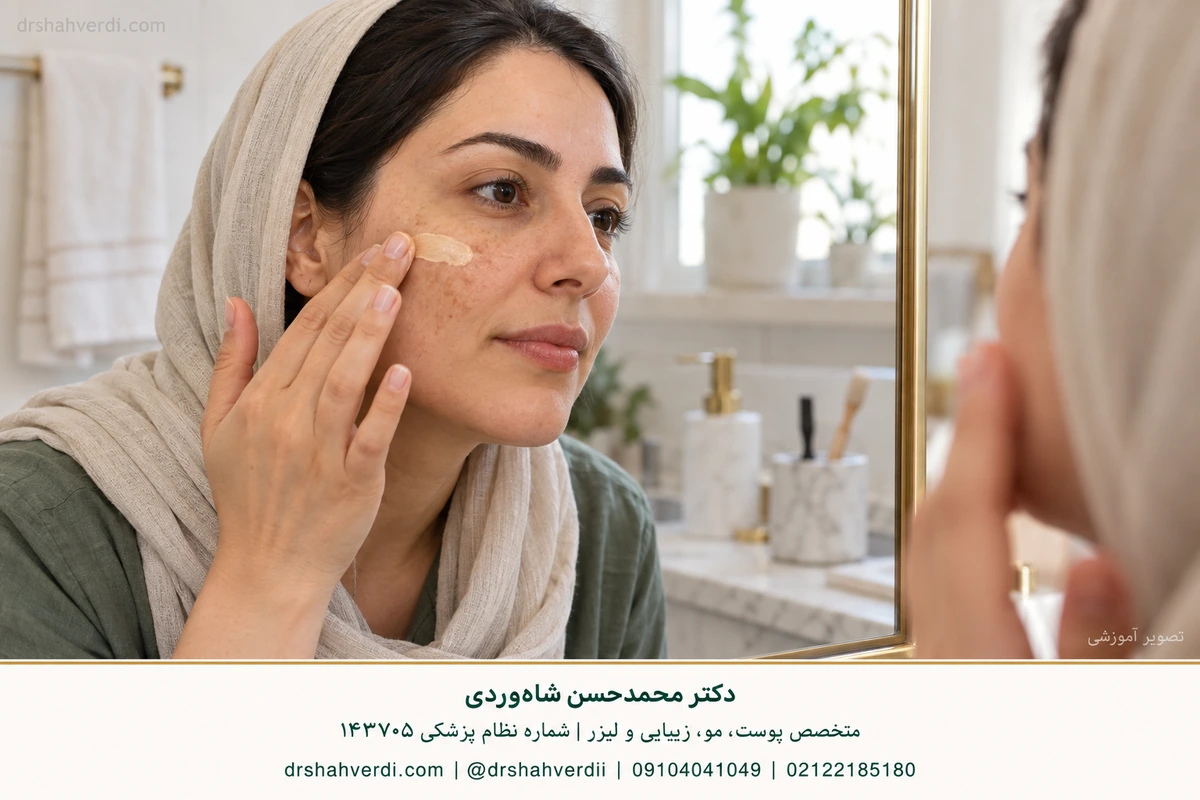
When the usual melasma advice is insufficient
A new, changing, bleeding or non-healing individual lesion needs assessment before cosmetic treatment. Melasma is not an explanation for every dark mark. Tell your clinician about pregnancy, breastfeeding or plans to conceive before choosing medicines. Do not stop hormonal contraception or another essential medicine solely because pigmentation appeared; discuss the possible connection with the prescribing clinician. Possible triggers.
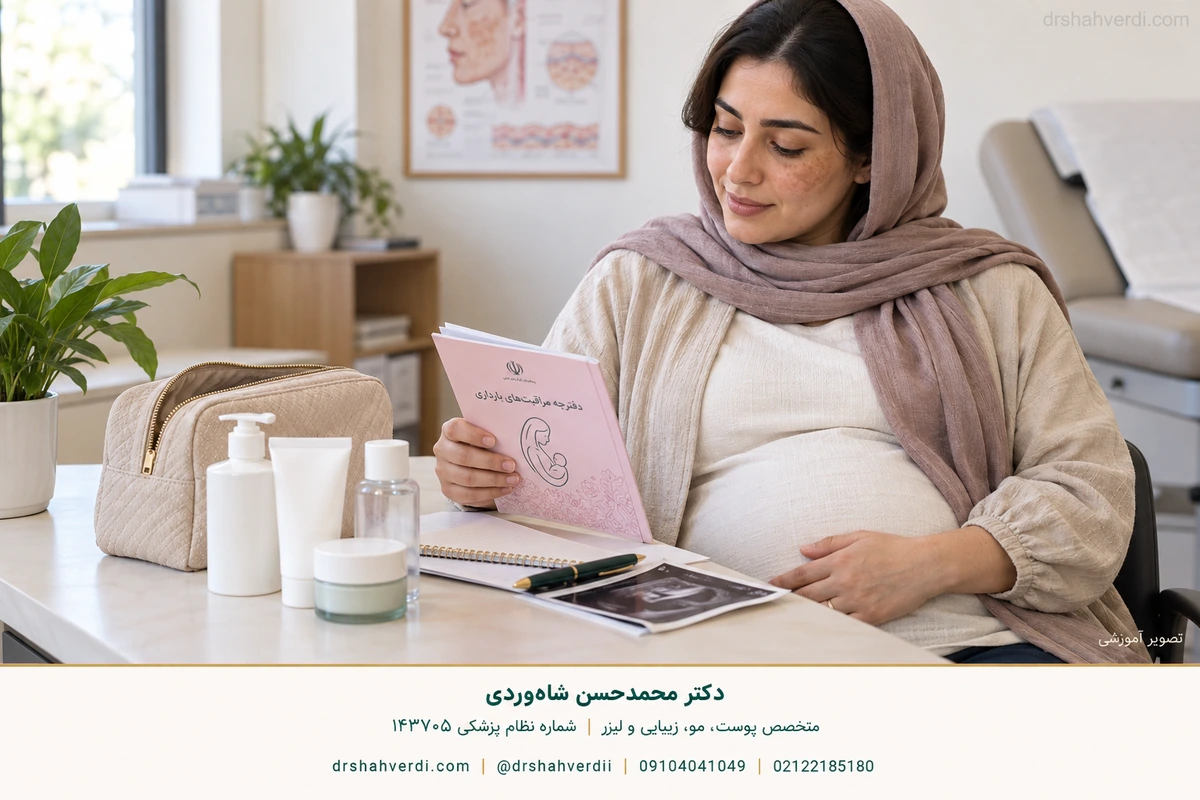
A routine you can keep using
Choose gentle products, a comfortable moisturiser and broad-spectrum sunscreen with SPF 30 or higher. Tinted sunscreen containing iron oxides can help protect against visible light, which may worsen melasma.
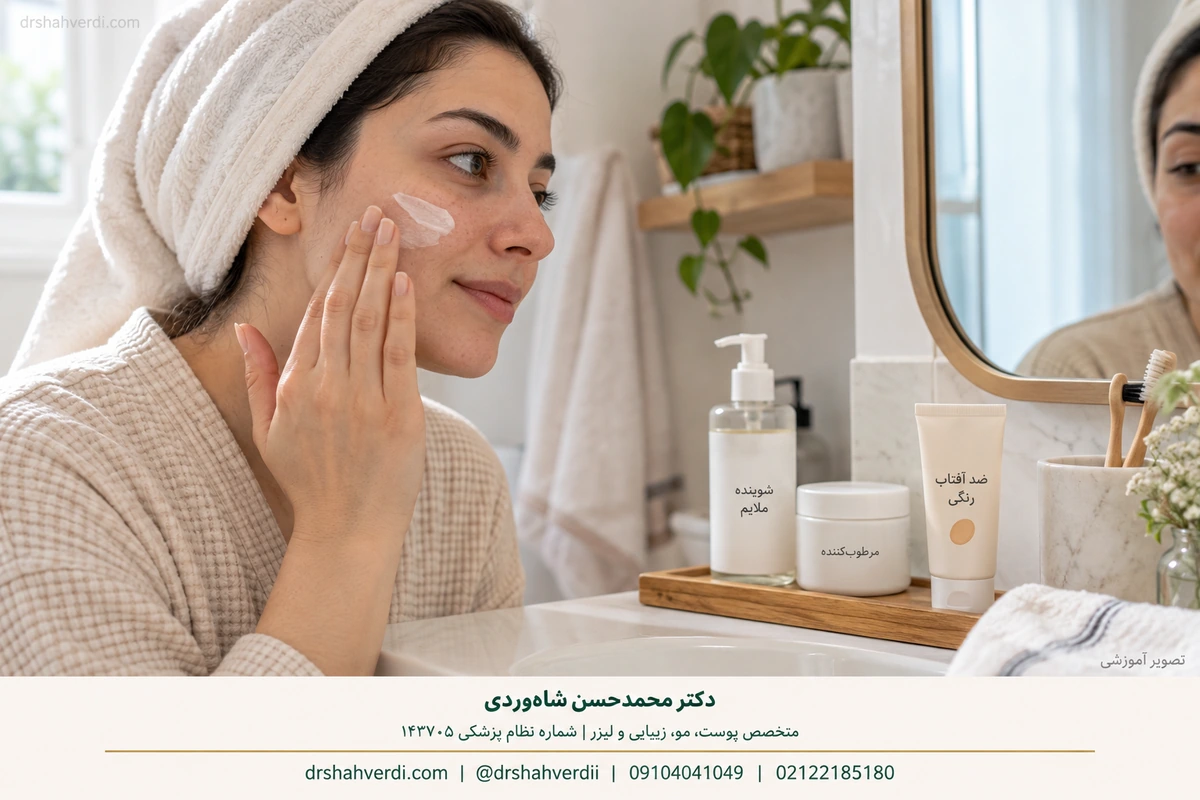
Add shade and a hat; reapply outdoors as directed and after swimming or sweating. Burning and stinging are reasons to review the routine. Our sunscreen guide explains practical selection. AAD self-care.
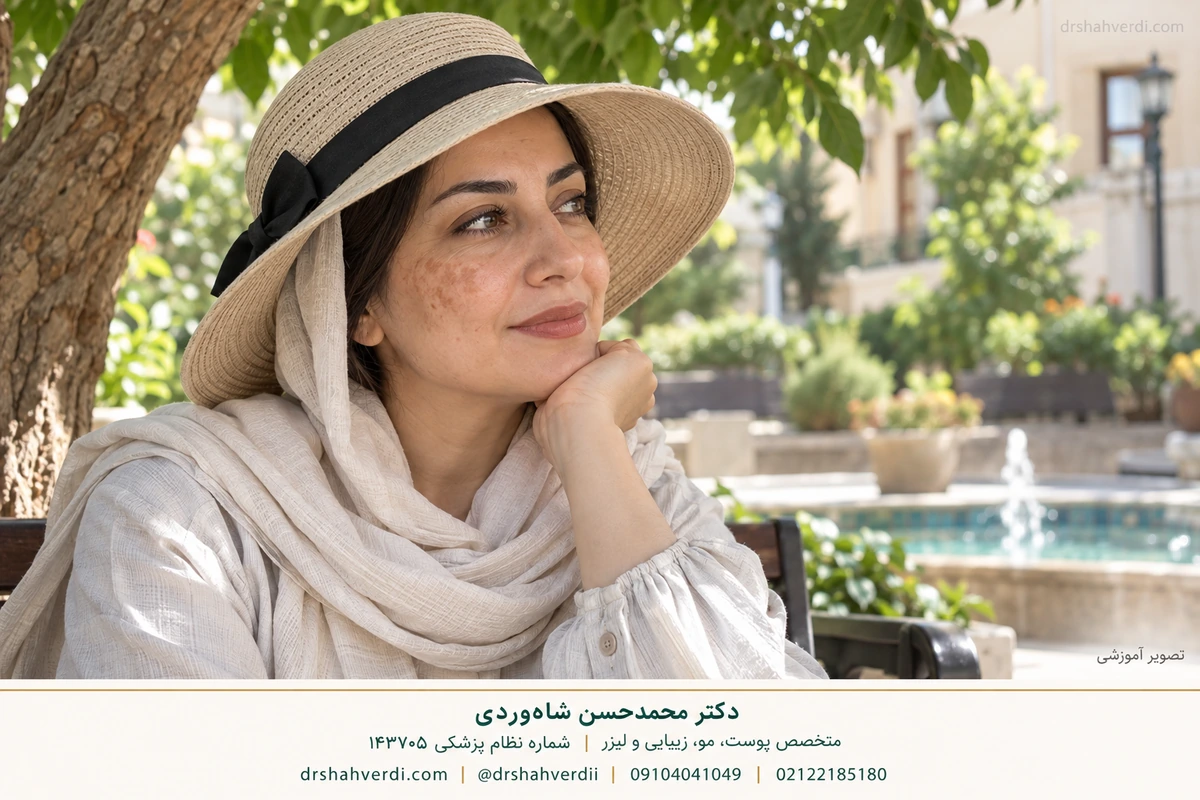
Choose a broad-spectrum sunscreen with SPF 30 or higher, together with shade and a broad-brimmed hat. Visible light can worsen melasma, especially in darker skin tones; a tinted formula containing iron oxides adds relevant protection. A mineral label, zinc oxide alone or a cosmetic shade does not confirm that a product protects adequately against visible light. Reapply outdoors according to the label, usually every two hours and after sweating or washing. Choose a tolerable texture you can use consistently; an advertising claim such as “best” does not replace label reading. AAD self-care guidance and our focused sunscreen guide (Persian) explain the distinction.
Preparing a useful discussion
Write down your main concern: colour, recurrence, irritation or uncertainty about the diagnosis. Ask what improvement is realistic and how it will be compared over time. Similar lighting and distance make follow-up photographs more useful. For an assessment with Dr Mohammadhasan Shahverdi, read the Tehran consultation guide and arrange the visit through the official contact page.
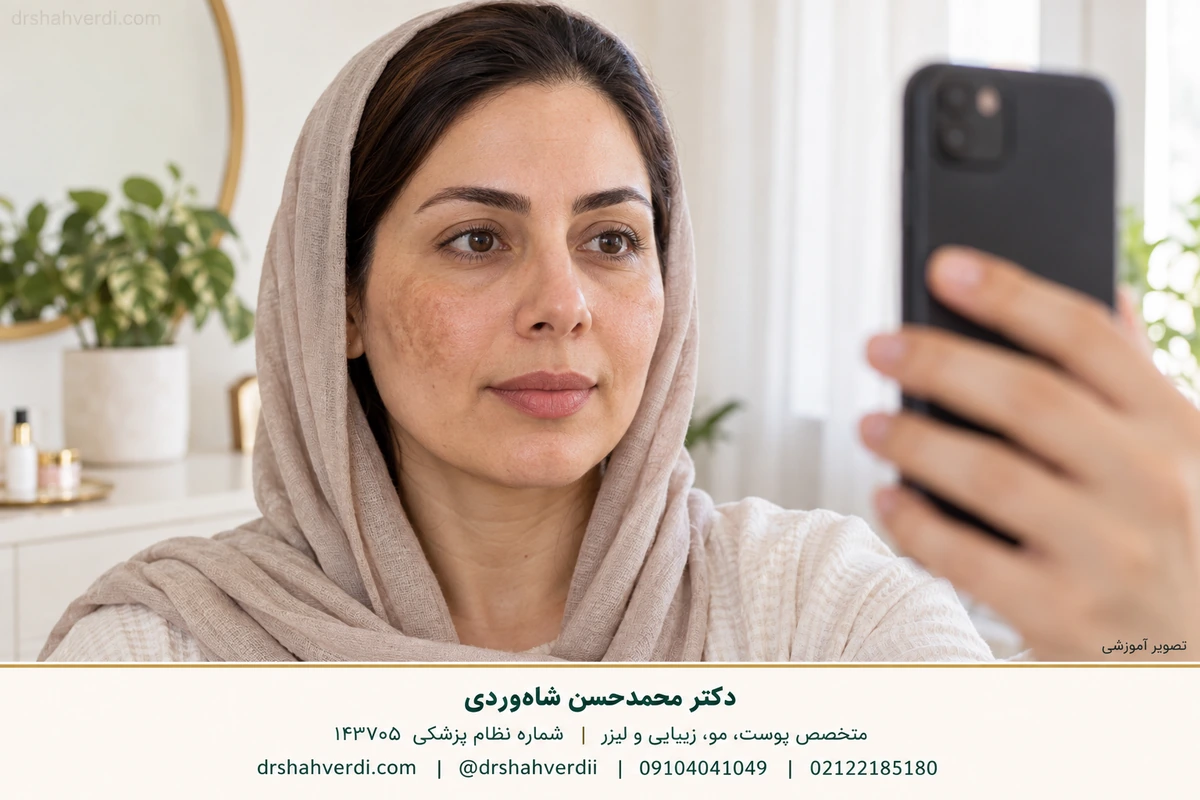
Bring the names of previous products and explain what happened with each one. This is more useful for planning than assuming the strongest treatment must be the right treatment.
Common questions
Is melasma the same as chloasma?
Chloasma is another name for melasma, frequently used for pregnancy-associated pigmentation. Melasma can occur outside pregnancy and in men.
Does melasma always disappear after pregnancy?
It may fade after pregnancy, but improvement is not certain. Persistent pigmentation and medicine choices during breastfeeding need individual review.
Can melasma be permanently cured?
Improvement is possible, but recurrence can occur. A maintenance plan and ongoing light protection help support the result without guaranteeing permanent clearance.
Does PCOS, PMOS or ovarian insufficiency explain my melasma?
Not by the diagnosis alone. PCOS, also called PMOS in updated terminology, and primary ovarian insufficiency are different conditions; neither a facial patch nor its colour establishes either diagnosis. If you already have one of these conditions, first confirm what the skin change is. Melasma, marks left after inflammation and darker velvety folds are different patterns. Melasma has several possible contributors, including light exposure, pregnancy and some medicines. That does not prove that an ovarian or metabolic condition caused your particular patch. AAD explains melasma triggers; the ovarian and skin guide explains the diagnostic distinction.
Does melasma mean I need insulin or weight treatment?
Melasma alone cannot diagnose insulin resistance or select a metabolic medicine. Dark, thick, velvety changes on the neck or in folds raise a different assessment question; use the acanthosis assessment section for that pattern. The clinician considers your history and findings before deciding whether metabolic testing is useful. If a metabolic condition is confirmed, its care matters for your health, but weight change or a metabolic prescription is not a guarantee that facial pigmentation will clear. AAD discusses assessment and variable skin response; NIDDK explains metabolic care.
How should I approach melasma treatment when I have PCOS?
Choose treatment for the confirmed skin condition, with your medical history and pregnancy or breastfeeding plans in view. The treatment path above and focused treatment guide remain the starting points; there is no universal cream selected from a PCOS label alone. Bring medicine names and the timing of any hormonal treatment changes. Discuss a suspected medicine trigger with the prescriber rather than stopping contraception or ovarian-insufficiency treatment yourself. Pregnancy safety and maintenance still require individual review. A Reddit experience can suggest a question to ask, but cannot establish your diagnosis, the safest regimen or your likely result. DermNet explains the treatment and recurrence context.
Scientific sources
- American Academy of Dermatology: Melasma overview
- American Academy of Dermatology: Melasma signs and symptoms
- American Academy of Dermatology: Melasma causes
- AAD: melasma self-care
- DermNet: melasma
- PCDS: Melasma (syn. chloasma)
- NICE: About Clinical Knowledge Summaries
- Pathology Outlines: original pathology reference
- Merriam-Webster Medical: chloasma pronunciation
- CDC official ICD-10-CM browser
- Original validation of MASI and modified MASI
بعد از این مطلب، چه بخوانیم؟
ذخیرهسازی اختیاری است و فقط در همین مرورگر انجام میشود؛ بدون حساب کاربری و بدون ارسال فهرست به سایت. روی دستگاه مشترک، دیگران هم میتوانند فهرست را ببینند. با پاکشدن دادههای مرورگر، فهرست از بین میرود.
مطالب ذخیرهشدهٔ من
هنوز مطلبی ذخیره نکردهاید. کنار راهنماهای پیشنهادی، «برای بعد نگه دار» را انتخاب کنید.
همهٔ مطالب ذخیرهشده از این مرورگر حذف شوند؟
حالا دوست دارید چه چیزی روشنتر شود؟
انتخاب شما فقط ترتیب پیشنهادها را عوض میکند؛ برنامهٔ درمانی نیست.



نظر شما، ادامهٔ این مطلب است
کدام بخش برایتان مفید بود؟ چه پرسشی دربارهٔ موضوع مقاله باقی مانده است؟
دیدگاهها پس از بررسی منتشر میشوند. این بخش عمومی است؛ لطفاً شماره تماس، تصویر، نتیجه آزمایش یا اطلاعات شناسایی و پزشکی خصوصی خود را ننویسید. دیدگاهها جایگزین معاینه و مشاوره فردی نیستند.
ثبت دیدگاه برای این مطلب در حال حاضر بسته است.